Our Learning
Music
INTENT – to what do we aspire for our children?
‘Music is a universal language that embodies one of the highest forms of creativity. A high quality music education should engage and inspire pupils to develop a love of music and their talent as musicians, and so increase their self-confidence, creativity and sense of achievement. As pupils progress, they should develop a critical engagement with music, allowing them to compose, and to listen with discrimination to the best in the musical canon.’
National Curriculum, 2014
‘Music is all around us. It is the soundtrack to our lives. Music connects us through people and places in our ever-changing world. It is creative, collaborative, celebratory and challenging. In our schools, music can bring communities together through the shared endeavour of whole-school singing, ensemble playing, experimenting with the creative process and, through the love of listening to friends and fellow pupils, performing. The sheer joy of music making can feed the soul of a school community, enriching each student while strengthening the shared bonds of support and trust which make a great school.’
DfE Model Music Curriculum, 2021
Music is a universal language that embodies one of the highest forms of creativity. For many pupils, the music they love will be part of the narrative of their lives and bring colour to the experiences that shape them. Learning about music is a vital part of a broad and rounded education. Taught well, music gives pupils the opportunity to make music, think more musically and, crucially, become even more musical.
Ofsted: Striking the right note: the music subject report, 2023
What drives our music curriculum at St Werburgh’s Primary School?
Music making encourages children’s personal expression and emotional development on both an individual and group level. It promotes appreciation of the richness and diversity of genres and cultures. Music celebrates our differences and unites us, connects us with our world, each other and ourselves. It triggers the release of feel-good chemicals into our brains, helps with concentration and affects how we feel. Music is good for us. We foster a love and understanding of music through singing, listening, playing, composing and performing.
Together towards excellence
-
We value and celebrate our music education, ensuring all children have the opportunity to be involved in music together. Musical experiences feature in our ‘Passport of Experiences’ for every year group.
-
Singing and the development of our primary instrument - the voice - takes a priority at our school, with every child involved in Singing Assemblies and having the opportunity to join a choir.
-
Our pupils experience learning a variety of instruments as a class ensemble.
-
Musical knowledge is developed through an ambitious curriculum which is made accessible to all.
-
Composing, playing and performing on an individual, group and school level are at the heart of Music at St Werburgh’s Primary.
-
A focus on learning and using musical vocabulary ensures children know, remember and express more.
-
We aim to give all children a knowledge and understanding of music which will foster a lifelong love of it.
-
We aim for our children to become confident, committed and curious young musicians.
Kindness
-
At St Werburgh’s our Music curriculum is broad, diverse and inclusive; it celebrates musical styles and cultures from around the world. We celebrate our local community with close ties to the Ivy Church and St Paul’s Carnival projects. Immersing our children in a diverse curriculum, and creating connections to our local area helps develop respect and kindness towards others.
-
Music requires our children to perform in front of others. Our musicians develop their performance and audience etiquette, and show respect for each other through support and honest, positive feedback. Children are encouraged to reflect critically and listen with respect to what others have to say, as well as play.
-
Children learn to cooperate, collaborate, share ideas, develop their ideas and come together to create a piece of work they are proud of. They listen to each other’s ideas, try them out, and come to a collective decision.
-
Children are exposed to a wide variety of instruments. They are taught the importance of respecting resources and the music environment. Children learn how to play with good performance etiquette and how to store instruments. They are taught how to follow their ‘conductor/leader’ carefully and respond to musical cues.
Curiosity
-
From EYFS onwards, children are given opportunities to explore, play, respond and compose. Music lessons develop a classroom culture of a safe space where risks can be taken.
-
Activities are crafted to be progressive, inclusive and rewarding. Collectively, this affords children the knowledge and skills needed to compose successfully and with confidence, and helps children use and develop their creativity.
-
Children understand that there is creativity in performance, not just in composition. They are encouraged to play with dynamics, tempo and body percussion.
-
Our curriculum spans continents and genres which allows children to connect with their world through music. Knowledge of Geography and History are deepened through connecting with different places and periods. We aim for our children to listen with appreciation, respect and empathy; to stand united in celebrating differences.
-
Our curricular and co-curricular offers give our children experiences which create lasting memories.
Commitment
-
Children are given regular opportunities to perform through singing assemblies, workshops to celebrate their learning and concerts. The resilience needed in the practice for these concerts helps nurture the value of Commitment.
-
Our commitment to performance experiences from Reception to Year 6 helps enable children to become collaborative performers.
-
We collaborate with schools across our Trust and Bristol through taking part in concerts as both performers and audiences. Children experience and perform in Bristol’s unique venues.
-
We are committed to performing both within and for our local community, with carol concerts at The Ivy Church, and our participation in St Paul’s Carnival Education experiences.
-
Children show aspiration in their commitment to improving and developing their performances and compositions. They have the resilience to express themselves musically and have the confidence to share their ideas. Our children believe they are musicians, performers, and composers.
Aims of the National Curriculum for Music:
-
Perform, listen to, review and evaluate music across a range of historical periods, genres, styles and traditions, including the works of the great composers and musicians.
-
Learn to sing and to use their voices, to create and compose music on their own and with others, have the opportunity to learn a musical instrument, use technology appropriately and have the opportunity to progress to the next level of musical excellence.
-
Understand and explore how music is created, produced and communicated, including through the inter-related dimensions: pitch, duration, dynamics, tempo, timbre, texture, structure and appropriate musical notations.
-
Have exposure to a wide range of diverse musical cultures and styles. The choices we have made support and reflect our local community and develop our children's sense of belonging. By the end of their time with us they will have a good experience of music from around the world balanced with the musical elements of their local community.
At St Werburgh’s Primary we aim to ensure that all musicians:
-
Deepen their understanding of the Musical Elements:
-
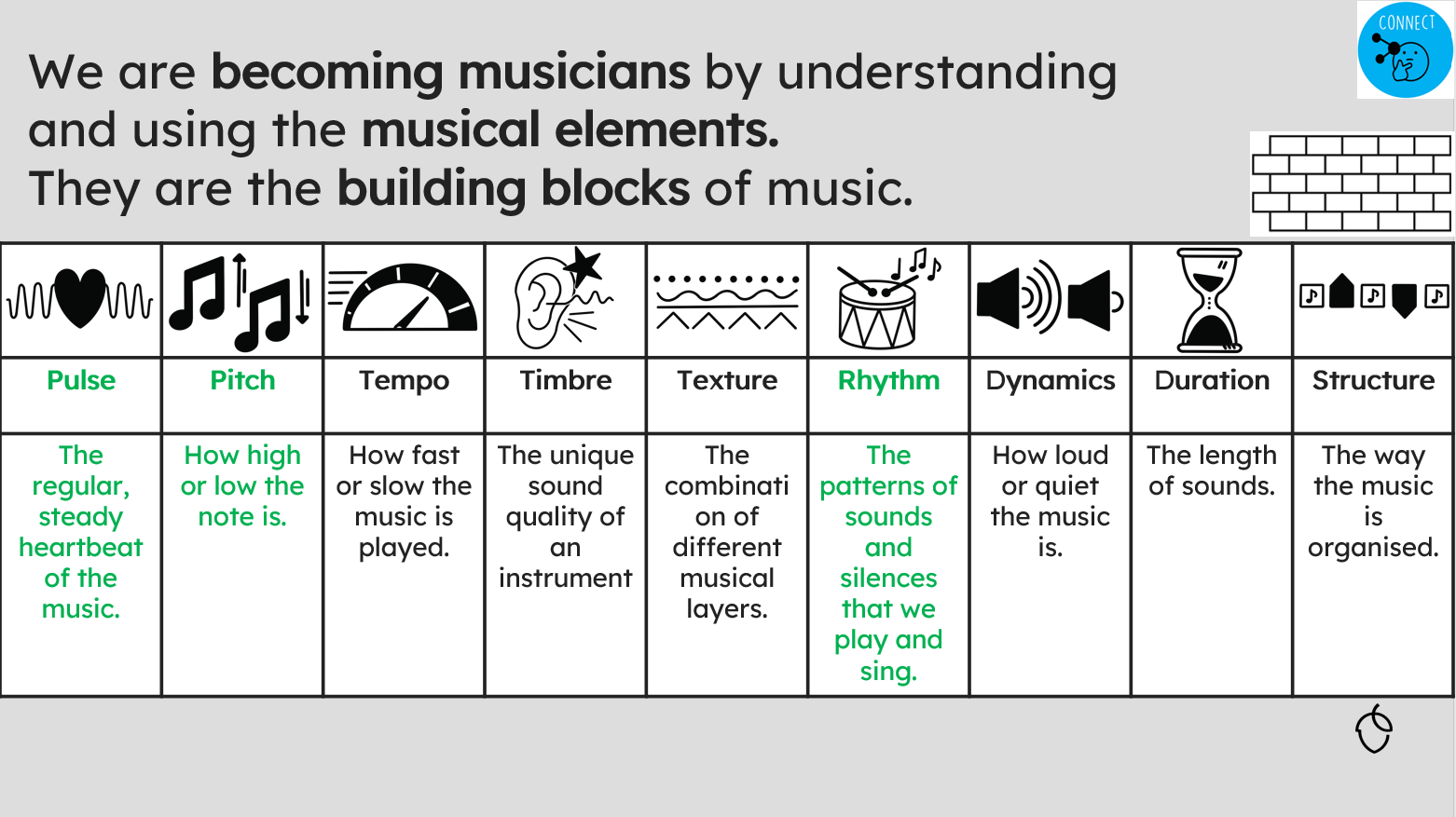
Pitch, Duration, Rhythm and Pulse, Tempo, Dynamics, Timbre, Texture, Structure
-
Develop musical skills and an understanding of genre and chronology progressively.
-
Connect with each other through collaborative learning and performances.
-
Retrieve, deepen and apply musical knowledge.
-
Nourish a broad and deep appreciation for musical diversity.
-
Nurture the musical capital of every child through co-curricular activities because music is a right for us all.
How We Go Above and Beyond the National Curriculum for Music
-
We immerse every pupil in a singing culture from Reception to Year 6, where singing develops joy, confidence, and musical understanding.
-
We teach musical literacy systematically from Reception using Solfège, Curwen hand signs, and Takadimi to develop an understanding of notation.
-
We expose pupils to a rich, inclusive musical canon, celebrating composers and performers from diverse backgrounds, including underrepresented voices.
-
We provide frequent and varied performance opportunities, from classroom sharing to public concerts, helping pupils develop confidence, pride, and performance etiquette.
-
We develop pupils’ metacognitive skills through scaffolded opportunities to learn how to practise and rehearse effectively.
-
We develop transferable life skills such as teamwork, commitment, independence, and reflection through collaborative music-making and performance.
-
We ensure all pupils have the chance to learn instruments through the careful sequencing of tuned percussion in class, and whole-class ensemble tuition by a Bristol Beacon tutor in Year 5.
-
We enrich learning through a wide co-curricular offer, including choirs, instrumental ensembles, and creative partnerships that nurture every child’s musical capital.
9. We foster a lifelong love of music, ensuring that all pupils, regardless of background, experience the joy, connection, and self-expression that music uniquely provides.
Vocabulary and Oracy
We recognise the vital role that oracy plays in the lives and life chances of our children; therefore we plan explicit opportunities to develop their oracy skills, as well as opportunities to learn through oracy across the curriculum.
We promote oracy through Music by modelling and teaching ambitious musical vocabulary. In turn, this allows the children to explain, discuss and share their ideas when expressing their music learning orally.
Musical vocabulary with dual coding is displayed in classrooms for children to refer to.
The Connect element of lessons contains a vocabulary focus. This is to connect to schema and previous learning before new learning.
Primary Music Curriculum Overview
We follow a bespoke EYFS Amplify Education curriculum and the Oak National Academy primary music curriculum in Years 1-6.
EYFS
Our bespoke EYFS curriculum lays down the early foundations for a lifelong love of music and musical learning. The curriculum is designed to give pupils the early foundations they need in order to undertake the Oak Primary Music curriculum. Pupils learn through a combination of pedagogical approaches, using movement, improvisation, singing, playing and early notation to introduce them to various musical concepts and the musical elements.
Years 1-6
The Oak National Academy curriculum develops pupils as musicians, fostering a deeper understanding of the subject as a platform for a lifelong connection with music. Through performance, composition and engaged listening, pupils develop their musicianship and experience a diverse range of musicians and styles, enabling them to embrace creativity and expression and build their understanding of and confidence in making music both individually and with others.
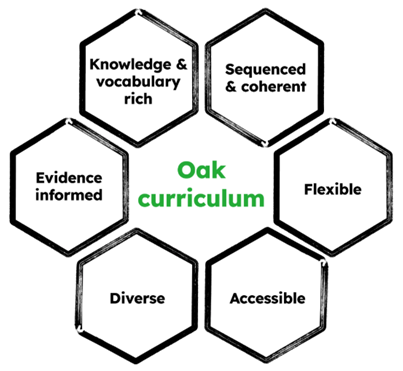
Oak’s curriculum principles are:
Overview of Units in Music:
|
EYFS |
Year 1 |
Year 2 |
Year 3 |
Year 4 |
Year 5 |
Year 6 |
|
|
Term 1 |
Start with Singing Songs about Me |
Start with Singing Finding my singing voice |
Start with Singing Learning through singing games
|
Start with Playing Adding percussive layers to build texture in our songs |
Start with Playing Adding layers to major and minor songs
|
Sing, Play, Perform Adding tuned accompaniment to part-singing |
Sing, Play, Perform Accompanying songs with polyrhythms
|
|
Term 2 |
Singing Together Let’s Celebrate |
Singing Together |
Singing Together How singing helps us work together |
Singing Together How songs are used in communities |
Singing Together How stories are shared through song |
Singing Together How songs unite us
|
Singing Together How songs have the power for change |
|
Term 3 |
Play and Create It’s Winter
|
Compose and Create Exploring and performing rhythm patterns |
Compose and Create Recording our musical ideas using a graphic score |
Compose and Create Notating and performing using rhythm grids |
Compose and Create Improvising within Hindustani classical music |
Whole Class Ensemble Tuition Steel Pans with Bristol Beacon
|
Compose and Rehearse Improvising with the minor pentatonic scale |
|
Term 4 |
Music and Movement How Music Makes us Feel
|
Music and Movement Feeling the pulse and changing the tempo |
Music and Movement Using symbols to represent pitch |
Playing Together |
Playing Together Effective rehearsing as part of an ensemble |
Whole Class Ensemble Tuition Steel Pans with Bristol Beacon
|
Playing Together Arranging and rehearsing a fusion performance |
|
Term 5 |
Compose and create Seaside Sounds |
Compose and Create High and low melodic responses |
Compose and create Improvising with four notes |
Compose and create |
Compose and create Composing a major melody on a stave |
Compose and Rehearse Creating and combining minimalist cells |
Compose and create Creating melodic variations based on a theme |
|
Term 6 |
Singing for Performance Controlling my Voice
|
Singing for Performance Changing tempo and dynamics in our songs |
Singing for Performance |
Singing for Performance |
Singing for Performance Discovering different ways to sing in harmony |
Compose and create Composing a minor melody on a stave
|
Singing for Performance Conveying emotion and character through performance |
St Werburgh’s Curriculum Design:
The following subject-specific principles informed the design of the new Oak primary music curriculum:
1. Develops pupils as musicians through performing, engaged listening, composing and improvising
We focus on knowledge and skills that develop pupils’ musicianship through practical music-making and engaged listening tasks. Content centres around developing knowledge of music (rather than about music) to ensure pupils develop a worthwhile understanding of the music they are learning about. Performance tasks consider expression, instrumental fluency, ensemble skills and accessibility. At key stage 2 the nuances of how to practise effectively and how to work as an ensemble are taught explicitly. Composition tasks promote development of creativity through a balance of artistic freedom and structured stylistic and theoretical guidance. Listening to, engaging with and understanding music is integral to the curriculum, as is developing an understanding of the musical elements.
2. Develops understanding of the elements of music and how these elements combine expressively through their application in sound
Understanding, recognising and the practical application of the musical elements in performance, composition and engaged listening is sequenced over time, and vocabulary and the application of the elements becomes more sophisticated as the units progress. For example, lessons introduce musical elements in turn, teaching how they can be altered to affect outcomes. This lays the foundation for more sophisticated application of the elements over time.
3. Sequences learning over time which:
● Builds musical knowledge, techniques and specialist language;
● Promotes the understanding of a diverse range of genres, traditions and styles;
● Develops pupils analytical skills in responding to different types of music.
Units are carefully sequenced over time to ensure knowledge of music is developed incrementally and with the time needed to embed practical skills, nurture creative skills and secure understanding of key musical terminology. The curriculum develops aural skills and promotes understanding of the musical elements and how to use them. Pupils are given the tools to articulate their understanding of and respond to and appreciate a diverse range of music from different genres and cultures.
4. Promotes co-curricular learning for all pupils through signposting to opportunities beyond the classroom.
Practical music-making is at the heart of this curriculum. This is shown through a major focus on singing during key stages 1 and 2, the explicit teaching of practice and ensemble skills, and a range of approaches to composing creatively and joyful examples of making music together. It is through this active musical curriculum that we hope to inspire young musicians to continue their learning beyond the classroom, and set them up to take advantage of wider music opportunities in line with the National Plan for Music Education.
Progression in Music at St Werburgh’s Primary
By the end of EYFS, pupils will:
● sing songs alone or with others, matching their pitch and following a melody
● share songs for an audience
● participate in singing games
● begin to control sounds on instruments
● move and play on the beat
● explore sounds independently, improvising their own musical responses
● create and respond to simple musical patterns
● respond in an imaginative way to music
● notice big contrasts in music e.g. tempo or dynamic changes
● listen with attention and give an opinion on what they have heard e.g. how it made them feel
● begin to understand that we can ‘notate’ music through visuals and symbols
● understand that music is enjoyed all around the world
By the end of KS1, pupils will:
● sing a range of songs alone or with others, including echo, call and response, folk songs and longer performance songs
● sing with greater accuracy, matching pitch (C4-C5), feeling the pulse and with a greater understanding of phrasing
● sing songs with a simple second part (one note ostinato)
● add actions and feeling to a song to communicate meaning and tell the story
● share songs for an audience with a sense of performance and understand the difference between a rehearsal and a performance
● join in with a variety of singing games, keeping to a steady beat and singing/moving at the correct time
● play classroom percussion with greater control including playing rhythms on instruments (Takadimi, Ta-di, Ta)
● understand the relationship between pitch and size on tuned percussion instruments
● select an instrument for its timbre and justify their choice
● create rhythms and select instruments to form part of a larger ternary structure piece
● compose and improvise four note melodies (do, mi, so, la) and play these on tuned percussion with increasing accuracy
● identify a wide range of classroom percussion instruments visually and by sound
● listen with concentration to longer excerpts of music and be able to answer questions around the musical elements and the mood of the music e.g. discuss the impact of dynamic changes or the timbre of an instrument and what it might represent
● respond to music, moving on the beat or demonstrating ideas through dance
● use graphic scores, simplified stave notation and stick notation as appropriate for decoding and recording musical ideas
● know and define the musical elements and use these terms when talking about music
● understand that different types of music can be played or sung at different times or occasions e.g. singing lullabies or singing energetic songs
● know that call and response songs can be found all around the world, and that these connect people without a need for notation
● know that music can be used for different purposes, including to achieve tasks
● start to talk about where music fits into the world
By the end of KS2, pupils will:
● sing a variety of songs including those in three parts, with a major or minor tonality and with syncopated accompaniments
● use the voice to create stylistic performances including in a jazz style, from opera and with beatboxing
● share and perform songs formally and informally to others, practising and rehearsing effectively in the lead up to a performance and using evaluation to improve a performance
● play accompaniments to song as part of an ensemble, including playing drones, melodic or rhythmic ostinati and building polyrhythms
● perform a variety of hand clapping games accurately, for example in a three part round, and understand how these may support an understanding of the musical elements
● play pitched and unpitched instruments with greater accuracy, improving technique and skill and an understanding of how to make the the best sound
● use a variety of practise and rehearsal techniques when part of an ensemble in order to improve
● improvise over, compose and play known major pentatonic (do, re, mi, fa, so), minor pentatonic (la, ti, do, re, mi), major pentachord (do, re, mi, so, la) and minor pentachord melodies (la, do, re, mi, so) on pitched percussion
● improvise, compose, play and sing with attention to metre, style, genre and character considering the musical elements to improve their performance
● compose and perform increasingly complex rhythms using the following rhythm patterns:
Ta, Ta-di, Takadimi, Takadi, Ta-mi, Ta-dimi, Taka-mi and explore playing and composing
with a variety of metre (2-time, 3-time, 4-time, 5-time)
● compose with a greater awareness of style, structure and how to form effective melodies
● recognise a widening variety of instruments by their sound and appearance
● listen with concentration to longer excerpts of music and use key musical vocabulary and the musical elements to frame their discussion
● listen with appropriate concert etiquette and review critically what they have heard using this as inspiration for their own work
- decode and perform from a variety of notation methods and understand that music can be notated in many different ways
● use various notation methods to record their work e.g. graphic score, stick notation, simplified or full stave notation, selecting the method that is most appropriate for each piece
● understand and articulate what a musical element is and have a working knowledge of all the musical elements
● understand that music can be used to share messages and express feelings and that there are many benefits of singing, especially from singing in a choir
● understand that there are numerous starting points for music, from the inspiration of the world around them to a cultural set of defined musical rules
IMPLEMENTATION – how will we deliver the curriculum?
Delivery of the Curriculum at St Werburgh’s
EYFS
We follow a Kodaly-based approach which provides a solid foundation level of music learning. Our bespoke EYFS curriculum is taught in both discreet music lessons and across our continuous provision. Children in Reception are exposed to a range of singing opportunities and music through continuous provision in their learning environment. Pupils learn a variety of songs with a topic-based approach, including learning about themselves, winter, spring, summer and the seaside! Songs are ‘caught not taught’, with immersive singing and games that have pupils singing and joining in organically. Activities involve early exploration of composing and improvising as well as laying the foundations for notation skills with an early introduction into pitch and rhythm. Through singing games, pupils explore all the musical elements, most notably beat, pulse, tempo and dynamics.
Instruments
We believe that every child should have the opportunity to play a variety of instruments. As part of their curriculum learning, our children will have a go at learning to play: a range of untuned percussion, Boomwhackers, ukuleles, glockenspiels, chime bars and steel pans.
Organisation
Years 1-6: Each year group is taught six units of work across the year, with each unit being six lessons long, a total of 36 lessons across the year. Lessons are 45 minutes in duration. Across each year, units focus on developing singing, instrumental, ensemble, performance and composing skills. Pupils build their substantive and disciplinary knowledge year on year, becoming more expert in playing and appraising a wide range of musical styles.
Lesson Outcomes
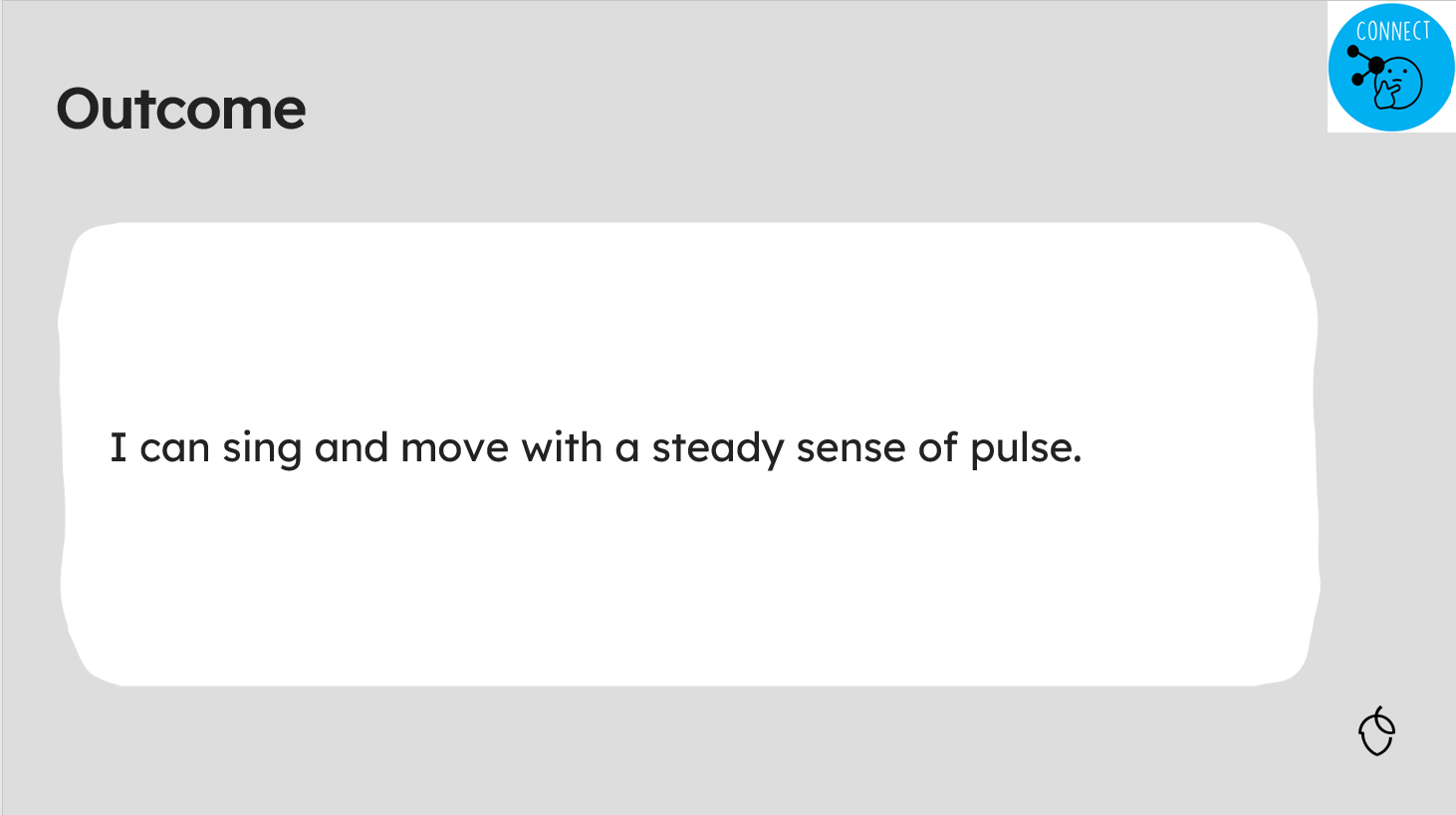
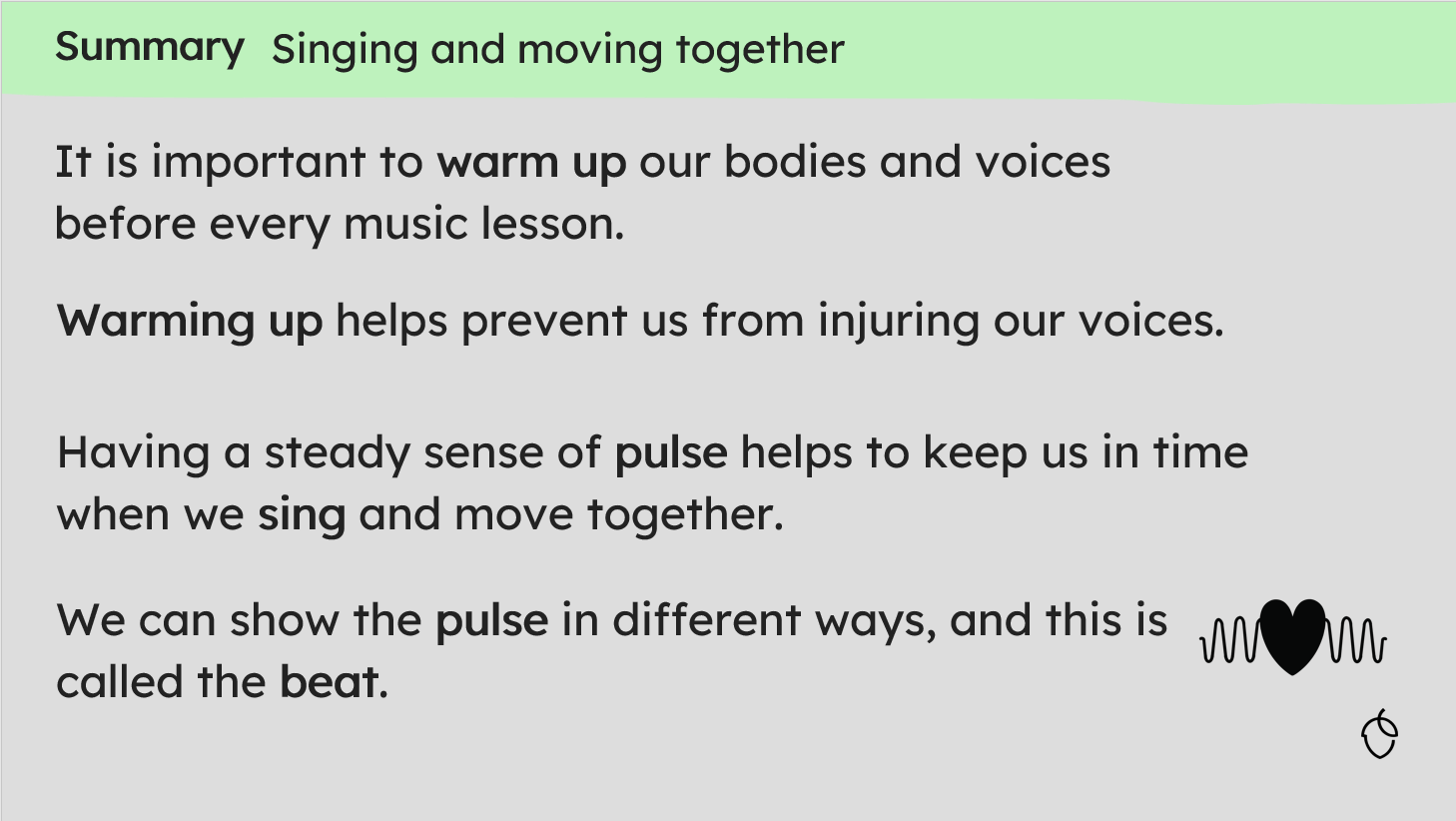
There is one ‘I can…’ statement for each lesson in the unit outlining the expected outcome for each lesson. The lesson summary provides an expanded list of key learning for each lesson.
Becoming a Musician
Each lesson supports pupils in becoming a musician through a focus on specific musical elements:
Pitch, Duration, Rhythm and Pulse, Tempo and Dynamic, Timbre, Texture, Structure
Key Features of a Music Lesson
● explicit delivery of key vocabulary and learning outcomes
● thoughtful and impactful sequencing
● immersive and engaging lessons
● sound before symbol: musical concepts are taught orally before being taught visually
● plentiful acapella singing and playing opportunities with songs used as a vehicle for learning
● practise opportunities whether individually, in smaller groups or as a class
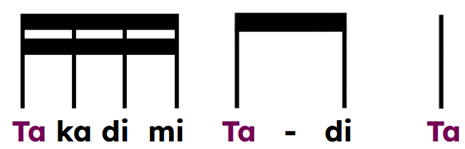
Rhythm
Rhythm is taught using the Takadimi, beat based system. This teaches Ta as the beat and the word ‘Takadimi’ helps to understand a variety of rhythms that are a subdivision of the beat.
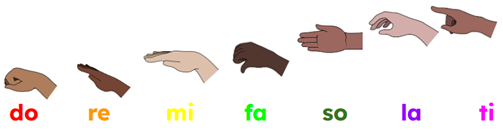
Pitch
Pitch and the understanding of melodic shape is taught using Solfège / Solfa and Curwen hand signs.
Music lesson design at St Werburgh’s
Cycles of learning
Lessons are divided into cycles of learning. This helps to manage cognitive load by ensuring that new learning is delivered in manageable chunks. It also helps ensure there is a clear narrative throughout the lesson.

Each learning cycle follows the CEEAC model above.
-
Connect: link to prior knowledge to check understanding through thinking hard
-
Explain: new knowledge is introduced through a new song or another new musical skill
-
Example: an example of the new musical learning is shared
-
Attempt: musicians have a go at new learning, with scaffolding
-
Apply: a task for musicians to practice their new learning independently or in groups
-
Challenge: learning is deepened though integrating learning with prior knowledge
Opportunities for working as a musician are built into each lesson.
-
Learning objectives show substantive and disciplinary skills.
-
Immersive and engaging lessons make good use of a wide range of available resources:
-
These include instruments, song banks and video clips.
-
Lessons build on previously learned musical knowledge and children’s experiences.
-
A focus on the explicit learning of musical terminology and vocabulary linked to each unit.
-
An element of individual, group and class learning and performance.
-
Children are empowered to compose and improvise within a structured environment.
-
A final performance where children collaborate to compose, practise and perform as a group or whole class.
Starter Slides
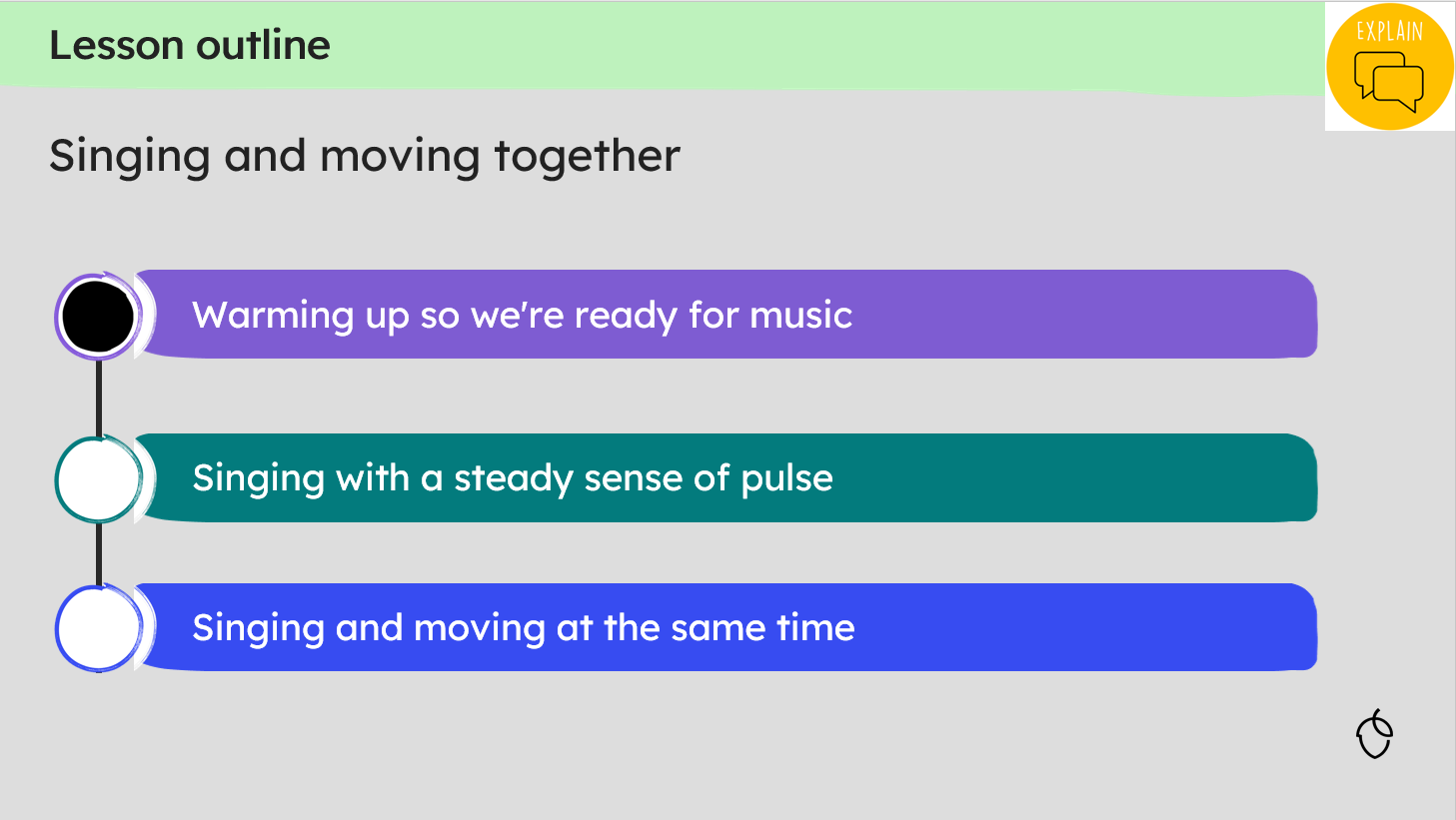
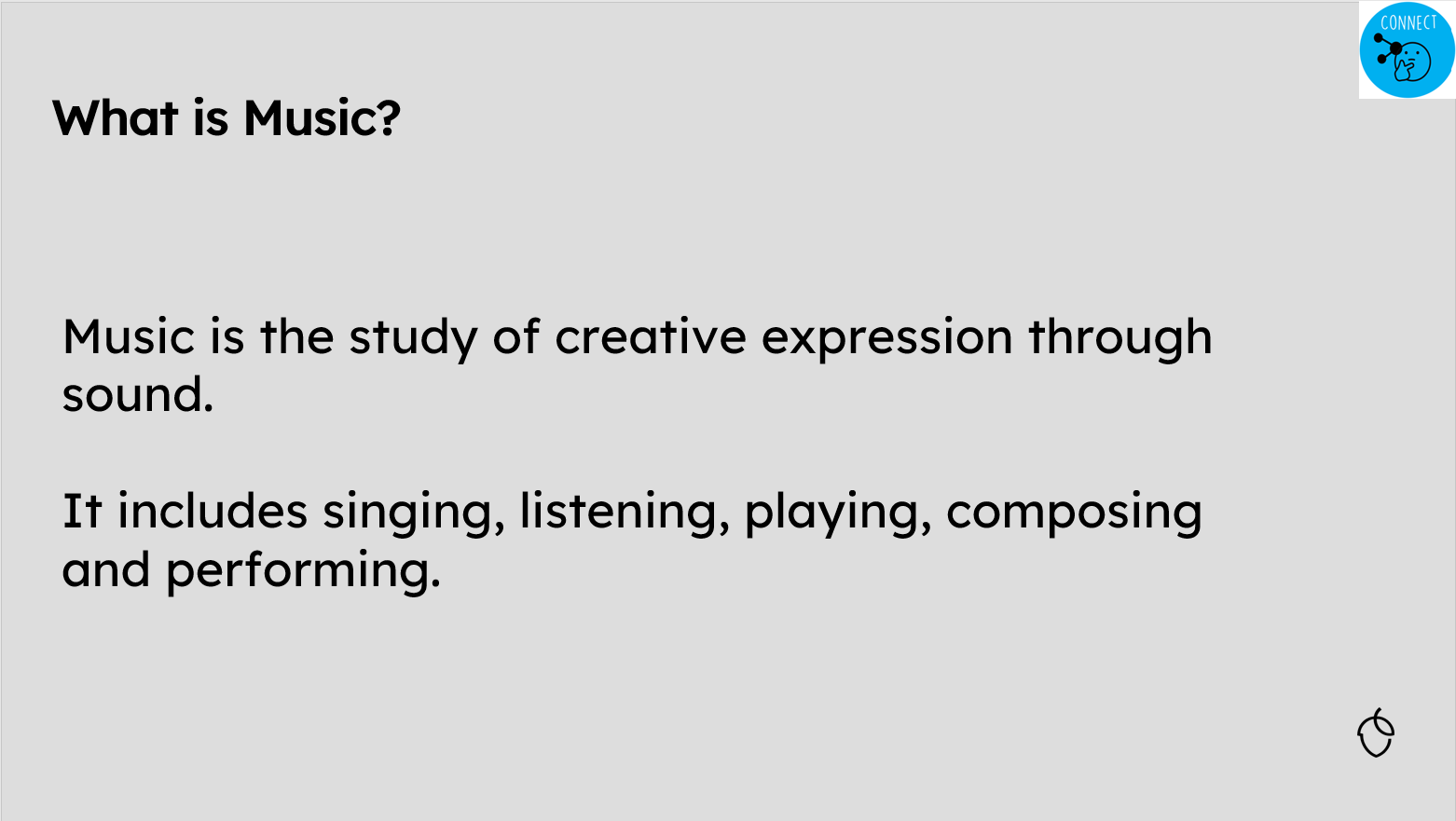
Each lesson will also include our definition of music and explore one or more of the musical elements:
Knowledge organisers
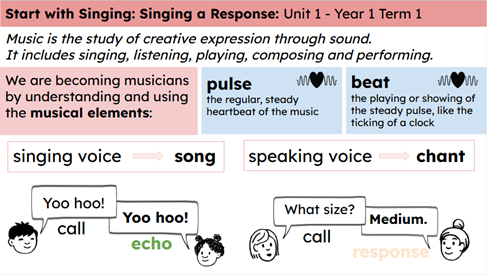
Knowledge organisers are used to connect to prior learning, as a scaffolding aid and as an assessment tool.
Diversity, Equity, Inclusion and Belonging (DEIB)
Provision for children with Special Education Needs and Disabilities (SEND)
At St Werburgh’s Primary School, it is our aim for all pupils to see themselves as musicians. Our music curriculum is designed to be inclusive and accessible whilst providing aspiration and appropriate challenge. Our music classrooms are positive, collaborative spaces where pupils develop independence, resilience and sense of belonging.
The pedagogical concepts of ‘sound before symbol’ and carefully prepared musical material means that concepts are carefully scaffolded for all learnings, using singing, movement and repetition to embed learning. This approach is beneficial to all but particularly to children with SEND.
The curriculum at St is inherently designed to support pupils with SEND through universal quality first teaching. This ensures pupils with SEND can participate fully in all music lessons and make expected progress.
Quality first teaching includes:
● High expectations and aspirations for all learners
● A carefully structured and sequenced curriculum
● Pre-planned and focused direct vocabulary instruction
● Modelling and demonstration
● Chunked instructions which are supported by visuals and gestures
● Review, recall, repetition and retrieval
● Frequent formative assessment as teachers check for understanding
● Accurate and regular feedback
However, we recognise some pupils need provision ‘additional to’ quality first teaching in order to reach their potential. This includes:
● Carefully considered scaffolding
● Explicit instruction and modelling
● Additional targeted adult support
Tackling the Disadvantage Gap
The recent Curriculum and Assessment Review 2025 highlighted the fact that the disadvantage gap is most stark in the music classroom. At St Werburgh’s Primary, our aim is for every child, regardless of background, to have equal access to a high-quality musical education. We are committed to creating a culture where every pupil sees themselves as a musician by setting high expectations and providing targeted support. Through this inclusive approach, all pupils, especially the most disadvantaged, can experience the joy, confidence, and self-expression that music brings, leaving primary school as capable, creative musicians.
Our curriculum works to reduce the gap by:
● the explicit and accessible teaching of notation from the outset
● providing musical activities, songs and listening examples that are diverse and engage all learners
● the explicit teaching of vocabulary and oracy skills
● the explicit teaching of metacognition, practising and ensemble skills and performance preparation
● providing effective and timely feedback
- using flexible grouping
● broaden cultural capital
In addition to this, our cocurricular offer works to reduce the gap by:
● providing accessible and welcoming choirs and instrumental ensemble opportunities
● subsidised peripatetic instrumental tuition for children in receipt of Pupil Premium
free peripatetic instrumental tuition for children with an EHCP / who are looked after
● plentiful live music experiences e.g. the Leap Ensemble, Bristol Classical Guitar Society
● inspiring pupils with visiting musicians
Diversity
We are working towards removing biases, stereotypes and false narratives in Music Education. Alongside the musicians and genres woven into the curriculum, we seek to expose children to a wide range of musical tastes from different cultures. We strongly believe that engaging children with aspirational musicians who look like them, have similar experiences, and come from similar backgrounds is a great source of inspiration and empowerment. You can be what you can see.
Oracy
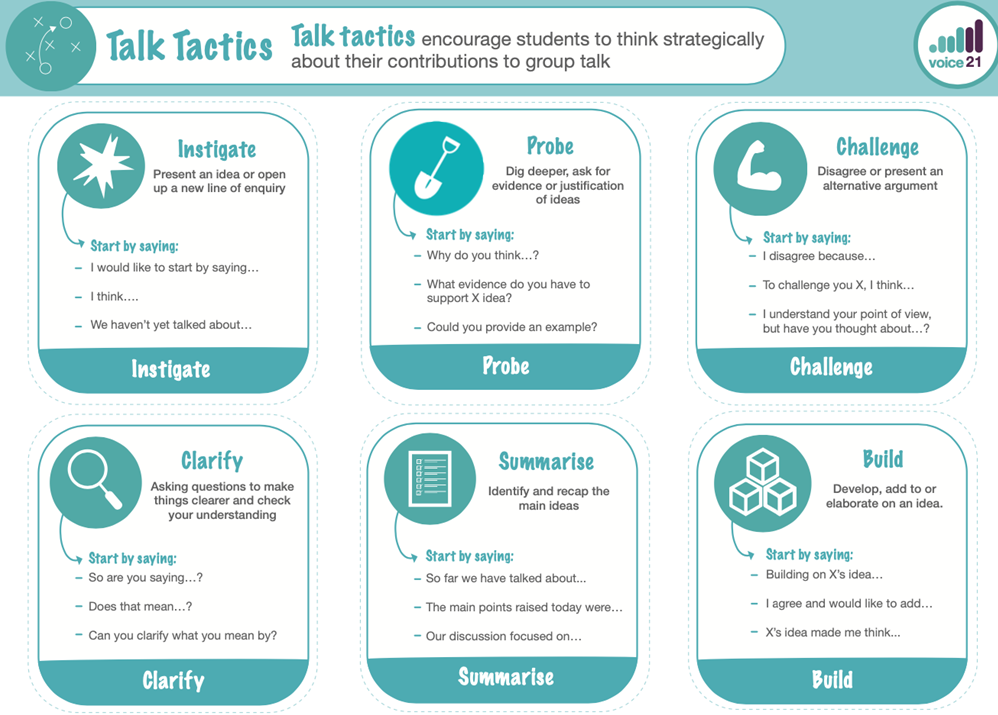
At St Werburgh’s Primary, we recognise the vital role that oracy plays in enabling our pupils to communicate with confidence, think critically, and engage deeply with their learning. Developing strong oracy skills is central to our curriculum, and we provide purposeful opportunities for pupils to speak, listen, question, and discuss their ideas across all subjects.
In music, we place particular emphasis on developing pupils’ musical vocabulary and their ability to express their understanding using precise and subject-specific language. Key vocabulary, especially that which relates to the musical elements, is taught explicitly and revisited regularly so that pupils can use it fluently when describing, evaluating, and creating music.
To strengthen these skills further, we embed strategies developed by Voice 21 across all lessons. These approaches encourage pupils to articulate their opinions clearly, build on the ideas of others, and use talk as a tool for thinking and learning. Through these practices, our pupils grow not only as confident communicators but also as reflective musicians who can listen attentively, discuss thoughtfully, and express their musical ideas with clarity and confidence.
Metacognition
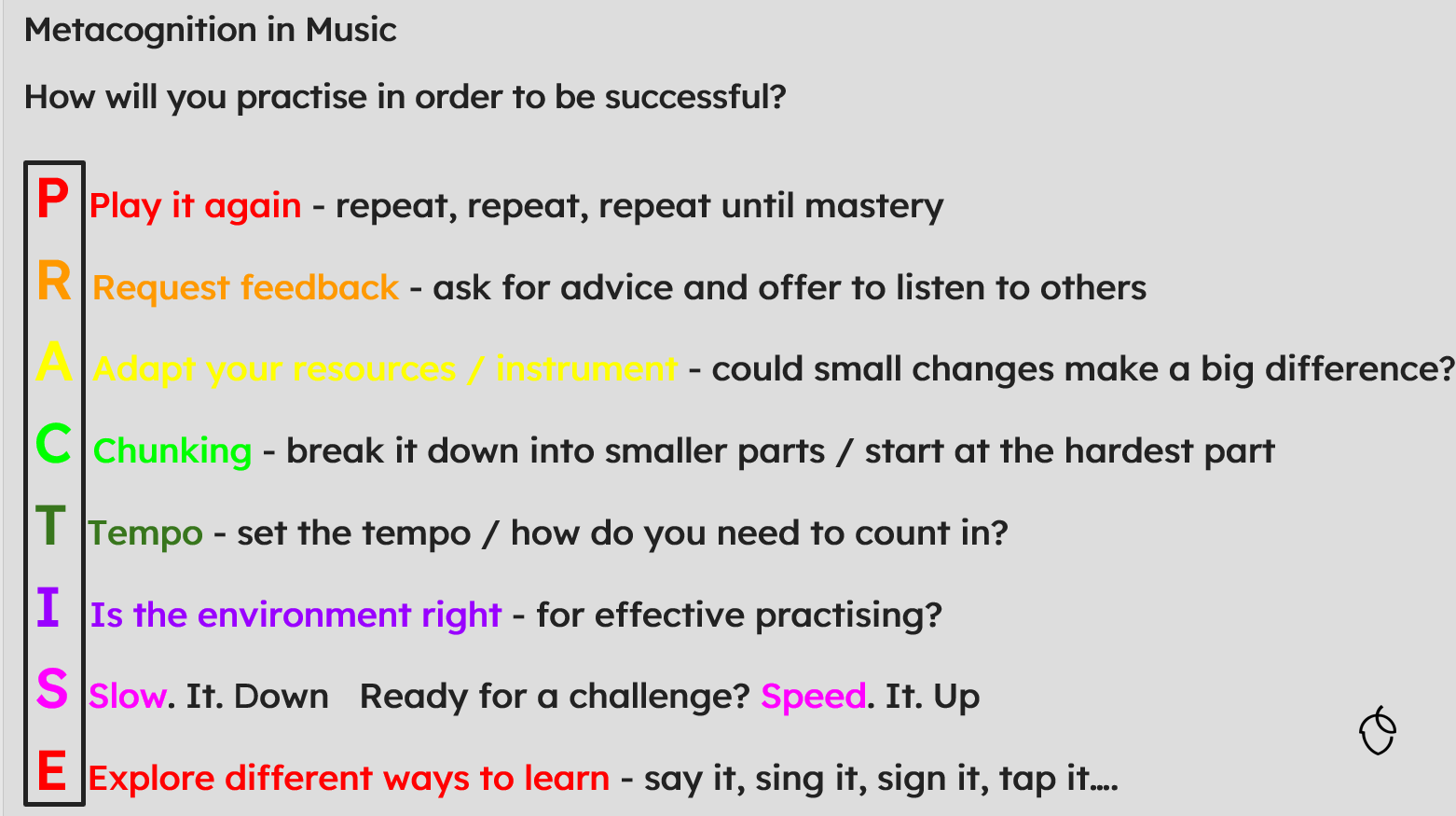
At St Werburghs Primary, we develop children’s metacognitive skills to help them move from “I can’t” to “How can I?”. In music lessons, teachers model their thinking when listening, composing, and taking dictation, making learning processes explicit.
Pupils are taught how to practise effectively, learning that progress comes from thoughtful, focused effort rather than repetition alone. Through ‘practising practising’, they build a toolkit of strategies to identify what needs improving and how
Reading Across the Curriculum
Music at St Werburgh’s is enriched with a wide selection of books about artists, particular pieces, periods of music history, genres and instruments. These books are stored centrally and can be accessed by our curious children.


Curriculum enrichment at St Werburgh’s Primary
Singing Assemblies
Singing Assemblies are delivered weekly in Key Stage 1 and Key Stage 2 by our Music Lead. The repertoire includes a rich variety of songs which are selected to develop choral skills including: unison, partner, round, echo, call-and-response and performance. There is a focus on one of the musical elements in each assembly which is taught explicitly. A welcome song is played as children come into assembly with the intention of exposing our musicians to many musical genres, styles and cultures.
Whole Class Ensemble Tuition
Steel pans tuition is delivered to Year 5 over Terms 3 and 4 by a specialist Bristol Beacon tutor. Our musicians learn the skills to enable them to play carnival-inspired songs such as One Love and Waka Waka. They showcase their learning to parents in a performance from our Dance Studio and also perform to Reception and KS1.
Playing and Listening
Our curriculum ensures our children grow as self-assured performers and interpretive audience members. Whole-classes have opportunities to play instruments, including a range of percussion, chime bars and steel pans.
Performing in Bristol
Children have opportunities to perform alongside other schools in concerts at large Bristol venues including Bristol Beacon, Trinity Academy, Lantern Hall and Spiegeltent. Children experience being an audience member at a concert at one of these venues.
Choirs
St Werburgh’s Primary School has two choirs which run as after-school clubs and meet weekly for 40 minutes. Silver Birch Choir is for singers in Reception and Key Stage 1. Willow Choir is for singers in Key Stage 2. Both are free of charge and open to all who would like to join. Silver Birch Choir performs to parents and carers three times a year. Willow Choir performs at the Key Stage 2 Carol Concerts, the Bristol Beacon Winter Sing event and the Trust Concert. Our choirs also perform at the Christmas Market, Summer Fair and in an end of year Thank You Assembly.
Visiting Musicians
We are committed to organising aspirational performances for our children. From cellists to trumpeters and blind music therapists, we aim to showcase the inclusivity and diversity of music.
Bristol Beacon Peripatetic Tuition
Peripatetic tutors from Bristol Beacon offer lessons on: piano, guitar, violin, flute, saxophone and drum kit. Lessons are 20 minutes long and available in both individual and small group formats. Individual lessons are priced at £175 for 11 weeks and Small Group lessons (of 2 – 4 children) are £88 for 11 weeks. Children in receipt of Pupil Premium funding are eligible for a 25% subsidy and free instrument hire. Children with an EHCP or who are in care are eligible for free lessons and instrument hire. These groups are given priority placement when spaces become available. Instrument lessons are held predominantly in our Dance Studio and other available teaching rooms where available. Children can work towards accredited grades with their tutors.
Rocksteady Peripatatic Tuition
Rocksteady offers children a route into instrument tuition through playing as part of a band. Rocksteady sessions are held on Fridays. There are 4 bands each with places for 9 band members. Children can play keyboard, electric guitar, bass guitar, drums or vocals and practise and rehearse as a band for their 3 x annual concerts. Sessions are 30 minutes long and charged at £38 per month with a minimum of 33 lessons held across the year. Pupils in receipt of Pupil Premium are given priority placement when spaces become available. We fund a space for a Pupil Premium band member; Rocksteady match fund a further space for another.
Instrumental Ensembles
St Werburgh’s Primary School offers two opportunities in the school calendar for instrumentalists in Years 3 – 6 to play in an ensemble. The first is the Key Stage 2 Carol Concerts in which musicians in Years 3 – 6 accompany the carols. The second is Amplify Trust Concert where musicians from Years 5 and 6 rehearse and play alongside other primary musicians as part of the Camerata. Previous Camerata pieces have included ‘In the Hall of the Mountain King’ and the ‘Dr Who’ theme tune. Pupils rehearse together as an ensemble and also individually / in small groups in lesson time with tutors. Pianists are involved through transferring their skills to glockenspiels. Some instrumentalists have previously taken part in Bristol Beacon’s Primary Orchestra Workshop, where children learn pieces then rehearse and play in a city-wide primary orchestra, supported by tutors and culminating in a performance to parents. If it is offered, we hope to take part in the experience again this year. Bristol Beacon have previously indicated they will charge £3 per child taking part; pupil premium children’s places will be free.
Christmas Performances
Reception delight their parents and carers with a Christmas Singalong in the playground. They sing a selection of Christmas and winter-themed songs with enthusiasm and enjoyment. It is their first opportunity to perform in front of a large audience. Year 1 perform a version of the Nativity story - Boogie Woogie Nativity - with confidence and commitment, combining songs and actions in front of their first large seated audience. Year 2 perform in Bristol Beacon’s Winter Sing which is hosted in the Spiegeltent. They work hard to rehearse a larger repertoire of songs at school then sing them with a live band. The children perform as part of a mass choir alongside many other Bristol primary schools. They then perform this repertoire back at school to their adults. Key Stage 2 hold two Christmas Concerts in the Ivy Church: one for Years 3 and 4; another for Years 5 and 6. The Ivy Church is a local, community-focused organisation into which we are welcomed each year by the Pastor and their team. All are warmly invited. The children sing a selection of winter and Christmas themed songs and parents join the singing for traditional carols. It is a joyful event with live accompaniment and performances from our KS2 Willow Choir. A growing number of our KS2 musicians play the traditional carols; parent musicians are also invited. It is a free event.
Year 6 Production
Our Year 6 children work towards a musical production every year. In the past two years, they have performed versions of Oliver, Peter Pan and Grimm: Once Upon a Musical. The singers work hard together to rehearse songs, some with parts and harmony. They take ownership of their production: their suggestions for actions and musical direction help shape it. Year 6 sing with character and pride. Many children put themselves forward to sing small solo and small-group parts. Children in Year 2 and Key Stage 2 are invited to watch the dress rehearsal of the performance. There are two final performances - a matinee and an evening performance. It is a ticketed, free event.
Bristol Beacon Events
St Werburgh’s Primary is a Bristol Beacon Member School. Through this membership, we enjoy attending many exciting musical events in our city’s flagship concert venues. These have previously included:
Key Stage 2 Winter Sing in Bristol Beacon Main Hall (KS2 Choir)
Key Stage 1 Winter Sing in the Spiegeltent (Year 2)
Key Stage 1 Summer Sing in Bristol Beacon Lantern Hall (Year 1)
Key Stage 2 Bristol Classical Guitar Society performance (Year 3)
Orchestra workshop at Trinity Academy / Bristol Beacon Main Hall (KS2 musicians)
For events with an audience, ticket prices are set by Bristol Beacon. Support has previously been offered to our families in receipt of pupil premium through offering some subsidised tickets.
Collaborative Amplify Education Trust Events
LEAP Ensemble
The LEAP Ensemble, from Royal Birmingham Conservatoire, have performed for our primary schools at Trinity Academy for the last three years. It has been attended by our Year 5 pupils. This is an incredible opportunity for our children to experience the sounds and sights of an orchestra of professional musicians, accompanied by talented secondary school musicians from Trinity, St Kat's and BCCS. The LEAP Ensemble perform a diverse range of music across many genres in an engaging and impactful show. Previous favourites have included 'Space Man', 'Final Countdown', 'Butterfly’ and the 'Star Wars Theme'. There is no cost to parents and carers for this event.
Year 2’s Celebration of Music
We invite all Year 2 children to a Celebration of Music, held every June at Trinity Academy. Classes rehearse and perform echo, call-and-response, partner, round and performance songs with peers from across the Trust. The children are always excited to sing accompanied by a live house band. They experience inspirational secondary instrumental performances. In 2026, these were a vocal soloist, a string trio and a rock band. This event offers our children the opportunity to sing as a mass choir and the chance to see a musical journey, from those just beginning to learn an instrument, to those who have chosen music as their career. There is no cost to parents and carers for this event.
Amplify Trust Concert
Our Key Stage 2 Willow Choir and Year 5 and 6 musicians are invited to perform at the Amplify Concert: a collaborative showcase of primary and secondary school music which has been in partnership with Royal Birmingham Conservatoire for the past two years. This has been held at Bristol Cathedral and Bristol Beacon. At past concerts, our Key Stage 2 Willow Choir has performed part, round, soul, and pop songs and songs in other languages with other primary schools. They have also performed songs as part of a Trust-wide singing ensemble. Our Year 5 and 6 musicians are invited to perform as part of a collaborative Primary Camerata. It is an inclusive and exciting evening where our primary musicians see aspirational performances from accomplished secondary musicians. Support has previously been offered to families in receipt of pupil premium through pre-sale booking and subsidised tickets. We hope to see this continue.
St Paul’s Carnival
St Paul’s Carnival is a truly celebratory event of Bristol’s Caribbean community. St Werburgh’s Primary School’s community is closely linked to and involved with the carnival. We have previously been invited by the St Paul’s Carnival Schools and Education Programme to take part in the main parade as samba musicians and dancers. This has involved children in Key Stage 2 taking part in a samba percussion and dancing workshop to learn a song and routine. On the day, the children dressed in carnival costumes they had made to represent our school. The event is a unique and incredible experience to be part of where our children also get to see aspirational performances. Last year, Year 5 took part in the St Pauls Carnival Experience event, performing and dancing alongside other primary schools from across our city.
Collaboration with Trinity Academy
We aim to make the most of our link to Trinity Academy - the closest secondary school in our Trust. Through cultivating a collaborative relationship with their Head of Music we have invited Year 8 pupils learning the djembe to give a performance and workshop on two separate days. On the first visit they showcased their songs from Ghana and Guinea to Reception, Year 1 and Year 2, followed by a workshop to Year 2 culminating in a shared performance. On the second visit they performed to Key Stage 2, followed by a workshop to Year 6, culminating in another shared performance. This is a way in which we help our Year 6 children prepare for Music at secondary school. Both events are inclusive, aspirational and nurturing. They are supported by another primary school in our Trust, who lend us their djembe for the events. We hope to repeat and build on the experiences again this year.
Collaboration with Parents and Community Members
Every year we invite accomplished or professional visiting musician/s to give a performance or demonstration and talk about their instrument/s. These have previously included: a blind music therapist, a cellist, a secondary school trumpeter and a 2-piece blues band from South India. These opportunities are for Key Stage 1 and 2 and include Reception whenever possible. We welcome and nurture collaboration with parents: one gave a demonstration on how sound is made using a multitude of woodwind instruments; another donated a computer with music technology programmes. Parents are invited to support school musical events by playing their instruments in the KS2 Carol Concert and as part of a band for our school ceilidh.
Experiencing Performances
Experiencing performances, from the low-key to the polished, is at the heart of Music at St Werburgh’s Primary. Our children experience many performance opportunities, both as musicians and audience members. Reception and Key Stage 1 watch Year 5 perform on the steel pans who also do a separate performance to the rest of Key Stage 2 and another for their adults. Year 3 showcase their learning on chime bars with a performance to their parents and teach them how to play a song. Year 4 perform their compositions on chime bars to Year 3 to show what they will be learning the following year. Key Stage 2 have done pop-up Singing Assembly performances to share their learning.
Pupil Passports
All pupils at St Werburgh’s Primary School complete a Passport of Experiences throughout their learning journey. Music features in every year group’s experiences, to build the musical capital of every child.
These are:
EYFS: sing to an audience; watch live percussion being played; play a range of percussion
Year 1: perform in a nativity; learn to play an instrument
Year 2: learn a French song; watch live music being performed; perform with a band
Year 3: play instruments in a performance
Year 4: compose a piece of music and perform it to an audience; compose using technology
Year 5: be in a Carnival-inspired performance
Year 6: perform on a stage; take part in carol concert; make instruments and perform in a band
IMPACT – how do we know our curriculum is effective?
Pupil Voice:
We understand that pupils are the best way to show how effective our curriculum is. Pupil voice will demonstrate:
● a passion, confidence and enthusiasm for music
● the ability to talk about themselves as musicians
● excitement about performance opportunities
● confidence in their ability to perform and participate
● healthy and growing attendance at cocurricular clubs including choir and orchestra
● enthusiasm for participating in performance opportunities
● correct use of precise musical vocabulary, notably the musical elements
● how they apply their knowledge in their learning
● an understanding of their musical journey
● an ability to engage with pupil conferencing as a form of assessment
● expected progress, regardless of starting points
● a continued study and passion for music beyond their time at primary school
High quality outcomes:
-
By the end of primary school, pupils should demonstrate progress and achievement across several key areas:
1. Musical Knowledge and Understanding
● secure understanding of the musical elements
-
ability to use musical vocabulary accurately to describe, evaluate, and discuss music they hear or perform
-
● musical appreciation will be broad, and they will have a good understanding and experience of musical styles and cultures from around the world, fostering lifelong curiosity
2. Practical Musicianship
● confidence and skill in singing tunefully, expressively, and with good technique
● ability to play classroom instruments with control, expression, and ensemble awareness
● experience, confidence and growing expertise in improvising and composing, showing creativity and understanding of musical elements
● competence in reading and writing notation, appropriate to age and stage
● an understanding of how to practise and rehearse effectively to improve their musical skills
● a clear progression and pride in performances and composing
3. Critical Listening and Appraisal
● capacity to listen actively and analytically, identifying musical features and making connections to context and meaning
● confidence to form and justify opinions using appropriate musical language
4. Personal and Social Development
● a commitment to rehearsing and performing to the best of their ability
● experience of collaboration and teamwork through ensemble work
● demonstrating a clear love of music and the joy it brings
● willingness to experiment, take risks, and reflect on their creative process
5. Lifelong Engagement
● start their secondary education equipped with a solid understanding of musical literacy and a passion for music
● a lasting enjoyment of music and motivation to continue musical involvement beyond primary school